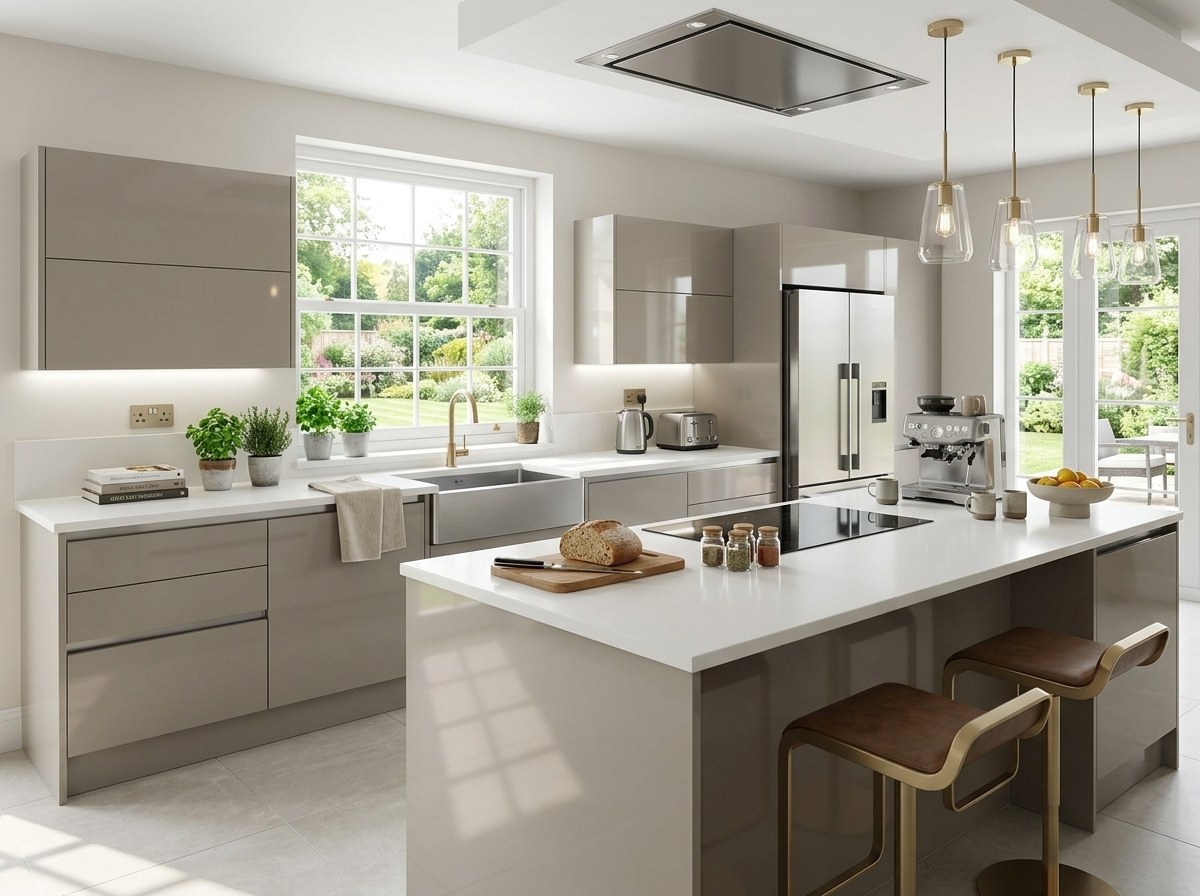
Quartz and quartzite are one letter apart and could hardly be more different. Add granite to the comparison and most homeowners are choosing between three surfaces they cannot reliably tell apart in a showroom. Here is what separates them in a working kitchen, five years in.
Quartz — engineered, predictable, low maintenance
Quartz countertops are roughly 90% ground natural quartz bound with resin and pigment. Because they are manufactured, the slab you approve is the slab you get.
- Cost installed: $65–$120 per square foot
- Non-porous — never needs sealing, will not stain from wine, oil or citrus
- Consistent pattern, which matters when you have several slabs meeting on a long run
- Weak point: heat. The resin scorches. A pan straight off the burner can leave a permanent mark, so trivets are not optional
- Weak point: sunlight. Some resins yellow in a south-facing window over years

Granite — natural, heat-proof, needs a little care
Granite is quarried igneous rock. Every slab is unique, which is either the appeal or the problem depending on your temperament.
- Cost installed: $55–$110 per square foot, with a wide spread by rarity
- Genuinely heat-resistant — the one surface here that shrugs off a hot pan
- Porous. Needs sealing on installation and roughly annually after; an unsealed granite will take an oil stain
- Pick your own slab. Never buy granite from a sample chip — go to the yard and look at the actual stone
Quartzite — the natural stone people actually want
Quartzite is metamorphosed sandstone. It looks like marble and behaves far better, which is why it has become the premium choice in Bay Area kitchens.
- Cost installed: $90–$200 per square foot
- Harder than granite and extremely scratch-resistant
- Heat-resistant like granite
- Needs sealing, and some slabs sold as quartzite are actually softer dolomitic marble — ask for an acid test before you commit
- Book-matching across an island and a full-height backsplash is where quartzite earns its price
The short version: quartz if you want to stop thinking about it, granite if you cook hot and hard, quartzite if the stone itself is the design.
Choosing by household, not by trend
- Young children, busy weeknights: quartz. Nothing to seal, nothing to stain.
- Serious cook: granite or quartzite, for the heat tolerance alone.
- Design-led kitchen with a statement island: quartzite on the island, quartz on the perimeter — the split most of our clients land on.
- Rental or flip: quartz, every time. Predictable, durable, and no maintenance to hand a tenant.
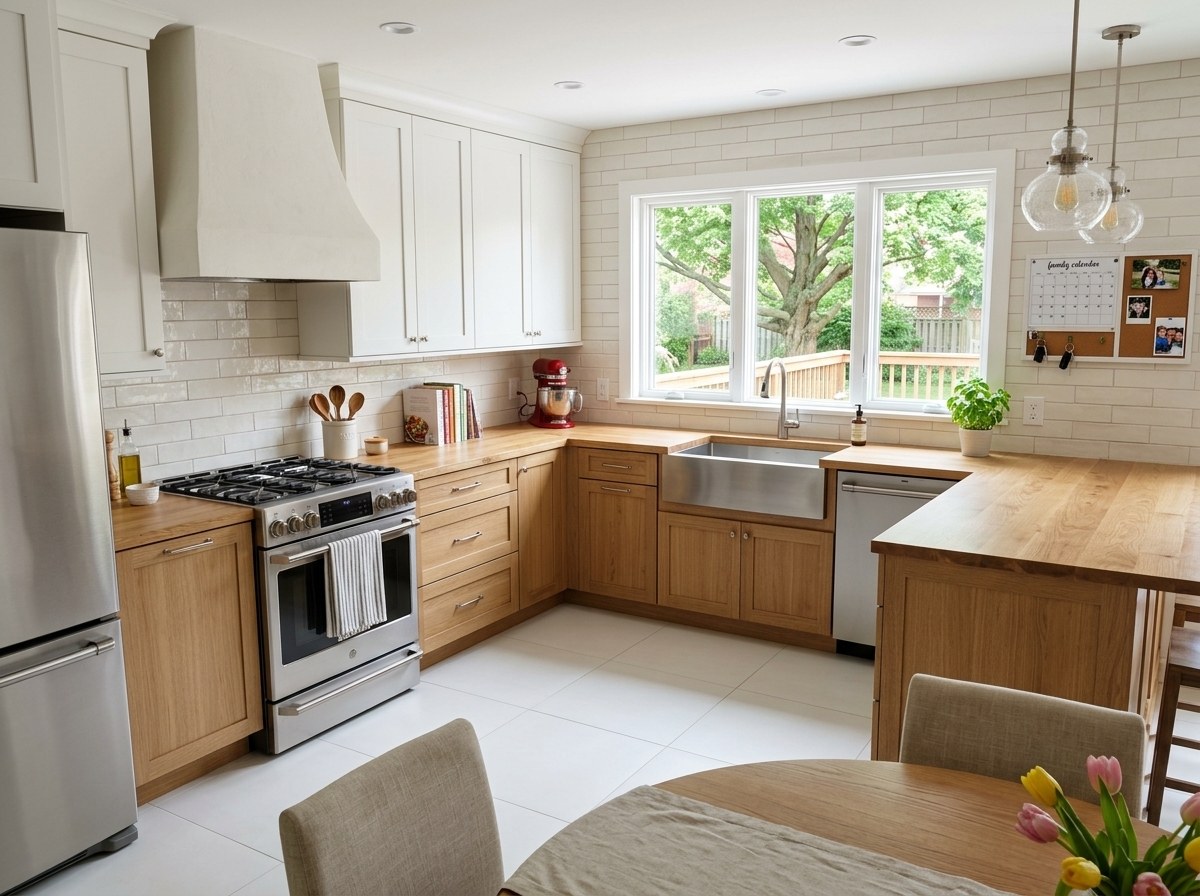
Two details that matter more than the material
Seams. A good fabricator places the seam where the eye does not go and matches the veining across it. A bad one puts it in the middle of the island. Ask to see the seam layout on your slab before fabrication.
Edge profile. A square eased edge reads modern and costs least. A mitred edge that makes the counter look 3 inches thick is the single most effective upgrade for a contemporary kitchen — and it adds material cost because it uses more stone.
See it on your own counters first
Stone is difficult to imagine from a 4-inch sample. Upload a photo of your kitchen to the free AI design preview and put each material on your own run before you go to the yard. When you are ready for real numbers, book a free measure — we template, fabricate and install, and the quote separates material from labour so you can trade one against the other. More on our countertop and cabinetry work, and finished examples in the gallery.