Berkeley may be the most natural ADU city in California: deep flatland lots, a permanent rental market anchored by the university, and a long tradition of backyard cottages that predates the term. Building an ADU in Berkeley today is faster than it has ever been — state law guarantees ministerial review on a 60-day clock — and Zen Construction (CSLB #1041370) handles the whole arc: feasibility, plans, engineering, the city process, and construction with our own crews. Eighteen years in business, 140+ projects delivered.
Owners come to us with three goals — rental income near campus, housing for parents or a grown kid, and long-term property value — and the same first question: what will my lot support? A free feasibility visit answers it honestly; request one through /custom and we'll walk the yard with you.
What kind of ADU fits a Berkeley lot
Berkeley's parcels sort into clear ADU patterns:
- Detached backyard cottages — the flats of Westbrae, South Berkeley, and North Berkeley hold long, deep lots where a 400–800 sq ft cottage fits without sacrificing the garden. Detached new-builds run $250k–450k in the Bay Area by size and site.
- Garage conversions — freestanding garages along the flatland blocks convert from roughly $120k, depending on slab, framing, and how far utilities must travel.
- Existing-cottage legalization — Berkeley yards hide decades of unpermitted studios and sheds; some can be brought into legality through the ADU framework, which we evaluate case by case with clear eyes about what the structure needs.
- JADUs and interior units — carved from large hills houses with walk-out lower levels, often the least invasive path to a second unit.
Berkeley's process: 60 days, if you do it right
State ADU law obliges Berkeley to review complete, code-compliant applications ministerially within 60 days — no hearings, no discretionary conditions. The application runs through the city's Permit Service Center, and completeness is the entire game: site plan to survey accuracy, floor plans and elevations, Title 24 energy compliance, structural engineering, and fire-separation details, all answered before a checker asks. That's how we submit, and it's why our timelines hold.
Berkeley layers a few local realities on top. Hills parcels in fire zones carry construction requirements — ember-resistant vents, tempered glazing considerations, defensible space — that shape detached designs. Energy expectations favor all-electric units, which we treat as the default: heat pumps, induction, and a service check on the main panel early, since many older Berkeley homes need an upgrade to feed a second dwelling. Where the sewer lateral is old clay, we scope its condition at the start rather than let it surface during trenching.
The campus effect: Berkeley's rental math
The university underwrites a rental market unlike anywhere else in the East Bay: graduate students, postdocs, visiting faculty, and staff compete for small legal units year after year, and vacancy is measured in days when a unit is priced sanely. A one-bedroom cottage in the flats — bikeable to campus — produces income that puts real pressure on its construction loan, and demand doesn't sag with the economy the way pure-market rentals can.
Two honest caveats. Berkeley's rent stabilization framework can apply to rental units depending on type and circumstances, and its rules are their own subject — we build the unit and point you to the right specialists for landlord law. And September matters: academic-calendar leasing rewards units finished by late summer, so we work backward from that date when an owner's goal is student-adjacent rental income.
Building in the flats vs. building in the hills
A flatland Berkeley cottage is efficient construction: level ground, simple foundations, utility trenches in a straight line, machine access down a side yard on the wider lots. Costs land in the lower-to-middle portion of the detached range, and schedules are predictable. Where lots narrow, we hand-dig and hand-carry — slower, budgeted honestly.
The hills change the equation the way they always do: engineered pier foundations, drainage that respects downhill neighbors, sometimes a soils report before design finishes, and fire-zone detailing throughout. Hillside ADUs cost more and take longer — and then rent or serve family beautifully, with privacy and views no flatland unit matches. We've built enough of both to give you an accurate picture at the feasibility visit, not a sales-call fantasy.
One contract, our crews, weekly photos
Berkeley owners have watched neighbors suffer the three-company ADU: architect, permit expediter, and builder, each billing separately and pointing at the others when the schedule slips. We collapsed it. Zen Construction draws, engineers, permits, and builds — foundation through finish — under one contract with one schedule, and every week you get a photo update showing exactly where the project stands. Completed units are in our portfolio, the feasibility visit is free, and if your lot doesn't pencil we'll tell you at that first visit, not after a design retainer.
Neighborhoods we serve in Berkeley
Our Berkeley ADU work concentrates in the flats — detached cottages and garage conversions across Westbrae, South Berkeley, and North Berkeley, where deep lots make the projects straightforward — with interior and walk-out lower-level units in the Berkeley Hills and Thousand Oaks, and the occasional legalization of a long-standing backyard studio in Elmwood. Near Downtown Berkeley and the Claremont edge, owners often aim units at the university rental market, and we schedule those builds around the academic calendar.
Reviews from Berkeley and nearby
The design tool sold me on two-tone — deep green base cabinets, white uppers — and I'm still glad I went for it. When the counter fabricator ran long they called me the day they knew and resequenced the rest of the work around it, so we still finished on the date they gave us.
Rockridge bungalow with floors that were never level. They shimmed and floated the subfloor before laying the engineered oak instead of pretending the problem wasn't there. Priced the extra work up front and walked me through why it mattered — the finished floor is dead flat.
Recent work you can price
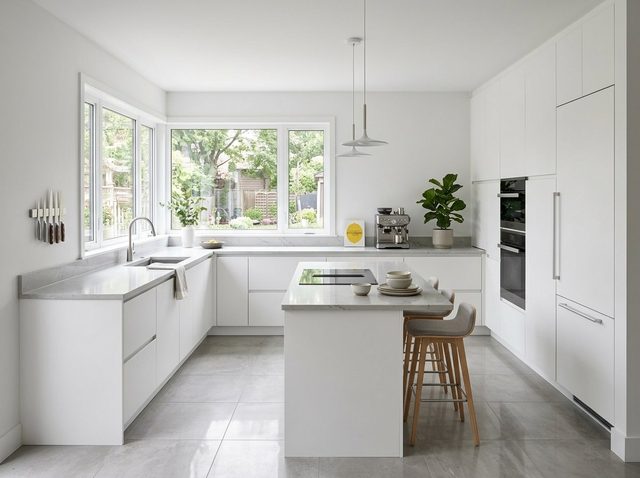
$15,000 – $25,000
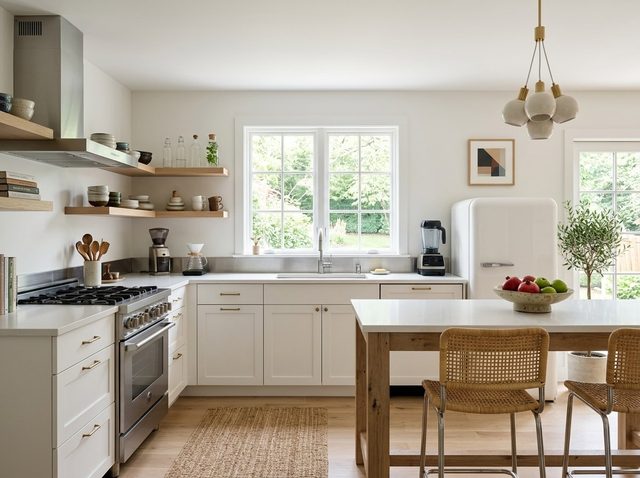
$18,000 – $30,000
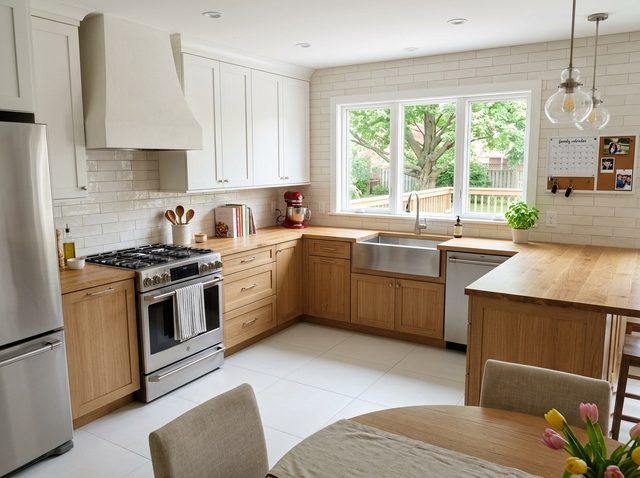
$22,000 – $36,000
ADU Construction in Berkeley — FAQ
How long does ADU approval take in Berkeley?
State law requires a decision within 60 days of a complete application, with no hearings for code-compliant units. The practical timeline hinges on completeness — missing engineering or energy documents restart the clock. Our submittals go in fully packaged, and well-prepared Berkeley applications typically resolve within a few months including comment rounds. Hills parcels needing soils reports run longer, and we say so up front.
How much does an ADU cost in Berkeley?
Typical ranges: garage conversions from about $120k when the structure is sound; detached backyard cottages $250k–450k depending on size, finishes, and site. Flatland lots with side-yard access land lower in the range; hills parcels with engineered foundations land higher. Common adders are electrical service upgrades and old clay sewer laterals. A free feasibility visit produces a line-item budget.
Can I legalize the old backyard cottage that's already on my lot?
Sometimes, and Berkeley yards are full of candidates. The ADU framework can provide a path for existing unpermitted structures, but the building must be brought to code — foundation, framing, egress, utilities — and occasionally rebuilding costs less than retrofitting. We inspect honestly, price both paths, and tell you which one we'd choose if it were our money.
Is a Berkeley ADU a good rental investment?
The university makes Berkeley's small-unit demand unusually deep and stable — graduate students, postdocs, and staff lease small legal units quickly at strong rents, and finishing by late summer catches the academic leasing cycle. Berkeley's rent stabilization rules can apply depending on the unit's circumstances, so review the landlord side with a specialist. We build for rentability: separate entrance, laundry, real soundproofing.
Can I build an ADU on my lot in the Berkeley Hills?
Usually, with engineering and fire-zone detailing. Expect pier foundations, deliberate drainage, possibly a soils report, and construction requirements like ember-resistant venting on fire-zone parcels. Interior conversions of walk-out lower levels are often the efficient hills alternative to a detached build. We assess grade, access, and fire-zone status at the free feasibility visit and give you real numbers for each option.
Do Berkeley ADUs have to be all-electric?
Berkeley's energy direction strongly favors electric, and we treat all-electric as the sensible default for new units regardless: heat-pump heating and hot water, induction cooking, no gas trench to pay for. The practical implication is electrical capacity — older homes often need a panel or service upgrade to feed a second dwelling, which we identify at feasibility and coordinate with the utility early.
Will an ADU eat my whole backyard?
On Berkeley's deep flatland lots, usually not. A well-placed 400–600 sq ft cottage on the rear of a typical lot leaves a genuine garden between house and unit, and thoughtful orientation preserves privacy for both dwellings. We design placement around the yard you actually use — sun, trees, sight lines — and show you the site plan before anything is final.
Do you handle the plans and the city process, or just the build?
All of it, in-house: architectural drawings, structural engineering, Title 24 documentation, the Permit Service Center application, every plan-check response, then construction with our own crews through final inspection and legal sign-off. One contract, one schedule, weekly photo updates. If you already hold plans from an architect, we'll review them for buildability and price the construction honestly.