Ask anyone who has done flooring installation in San Francisco and they'll tell you the floor itself is the easy part — it's what's under it that decides the result. A century-old Victorian rides on post-and-pier foundations that have settled unevenly for a hundred years; a South Beach condo needs sound-rated underlayment and HOA sign-off before a single plank goes down. Zen Construction (CSLB #1041370) has installed and restored floors across the city for 18 years with our own crews, and we treat the subfloor as the project, not a footnote.
We supply and install solid and engineered hardwood, LVP, laminate, and tile, refinish original old-growth floors where they deserve saving, and do whole-home installs as part of larger remodels or on their own. Get a free in-home measure and quote, or send us your rooms through /custom to start with numbers.
Flooring installation in San Francisco starts under the floor
Our first hour on a San Francisco job is spent with a level and a moisture meter. Post-and-pier Victorians and Edwardians settle differentially — a two-inch fall across a room is common — and the right response varies: sistering joists, sleeper systems, or self-leveling over a solid substrate. Skip this step and the new floor telegraphs every hump and hollow, gaps open at the baseboard, and click-lock joints fail. We flatten first, then install.
- Moisture readings on every substrate, because the fog belt keeps crawl spaces damp most of the year.
- Crawl-space checks for failed vapor barriers and vent blockages before wood goes down above.
- Structural fixes — sagging joists, cut framing from old plumbing — repaired by our own carpenters, not deferred.
Save the original floors, or start fresh?
Many San Francisco homes still carry their original floors — old-growth Douglas fir softwood in bedrooms, quarter-sawn oak in parlors — and material of that quality is essentially irreplaceable. Where the wear layer allows, we sand and refinish: repairs woven in from matching salvaged stock, water-based or oil finishes depending on the look you want, and patches where walls came out over the decades. A refinished 1905 fir floor has a color and grain no new product imitates.
When the boards are too far gone — or the fir is simply too soft for a household with dogs and kids — we're honest about it and lay out replacement options: solid hardwood at $12–18 per square foot installed, engineered hardwood at $8–14, both in period-appropriate widths and stains so the house still reads correctly. The call between saving and replacing is one we help you make with the actual floor exposed, not from a brochure.
Condos and flats: sound ratings, HOAs, and logistics
A big slice of San Francisco flooring lives in multi-unit buildings, where the governing document isn't the manufacturer's spec sheet — it's the HOA's. Most associations require a minimum impact-sound rating for hard flooring over occupied units, and some restrict hard surfaces to certain rooms. We read your CC&Rs, specify underlayment that meets the stated IIC requirement, and submit the assembly for approval before work starts, because tearing out a new floor over a sound complaint is a miserable way to learn the rules.
Logistics are handled the SF way: elevator reservations and padding, materials acclimated inside the unit, work confined to HOA hours, and debris carried out daily since there's nowhere to stage it. Neighbors below get notice before the noisy days.
Choosing materials for fog, sand, and hills
The city's microclimates genuinely change what we recommend. In the Outer Sunset and Richmond, persistent marine moisture argues for engineered hardwood over solid in ground-floor rooms — the plywood core shrugs off humidity swings that make solid boards cup. Homes a block from Ocean Beach fight sand, which acts like sandpaper underfoot; a harder species and a robust finish coat earn their cost there. In sunnier Noe Valley and the Mission, south-facing rooms need UV-stable finishes so the floor doesn't two-tone around the rugs.
For rentals, garden units, and busy family floors, LVP and laminate at $4–8 per square foot installed take real abuse and handle damp entries gracefully. We bring samples to the measure and tell you what we'd put in our own house for your exact conditions.
Whole-home installs, remodel tie-ins, and volume work
Flooring is often the last act of a bigger story: we lace new oak into old where a wall came out during a kitchen remodel, run one continuous floor through a full flat renovation, or re-floor an entire building between tenants. Because our installers work alongside our own carpenters and painters, sequencing is clean — base and casing go on after the floor, transitions are planned rather than improvised, and you can preview finishes in your own rooms with a photo upload at /design. We also take on volume installation for general contractors and small developers who need a reliable flooring crew across multiple units; recent work is in our portfolio.
Neighborhoods we serve in San Francisco
Around the city our flooring work follows the housing stock: refinishing original fir and oak in Noe Valley, Bernal Heights, and Mission District Victorians; engineered hardwood and LVP for fog-side homes in the Outer Sunset and Richmond District; sound-rated condo installs downtown and in Pacific Heights buildings; and durable whole-house LVP for family homes and in-law units in the Excelsior and Glen Park. Post-and-pier leveling comes up in nearly every one of those neighborhoods, and it's the part of the job we never skip.
Reviews from San Francisco and nearby
Tiny Sunset kitchen, three windows, no room for error. They measured twice and built to the millimetre. Getting cabinets up a narrow staircase without marking a single wall impressed me more than anything.
Coastal kitchen built around the big window we refused to give up. They redesigned for the light instead of building over it — open shelving, quartz, tile to the ceiling. I still take pictures of it.
I was nervous about hiring anyone after a bad experience years ago. Written scope, a schedule I could actually read, and photos every week while I was travelling. This is how it should be done.
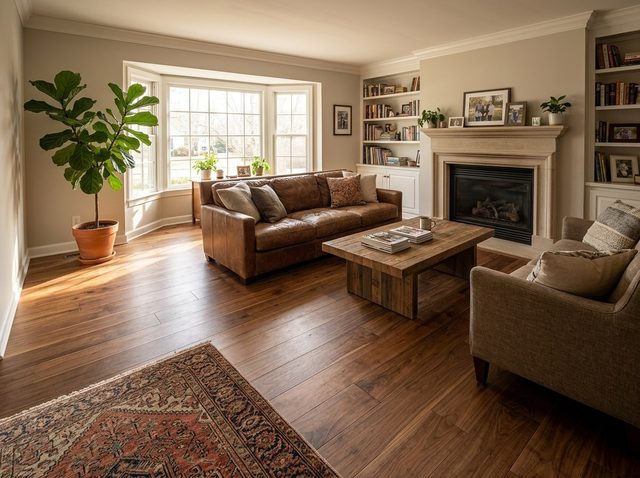
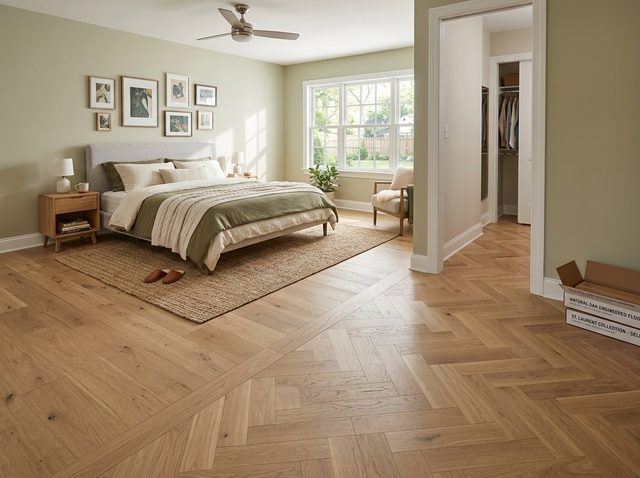
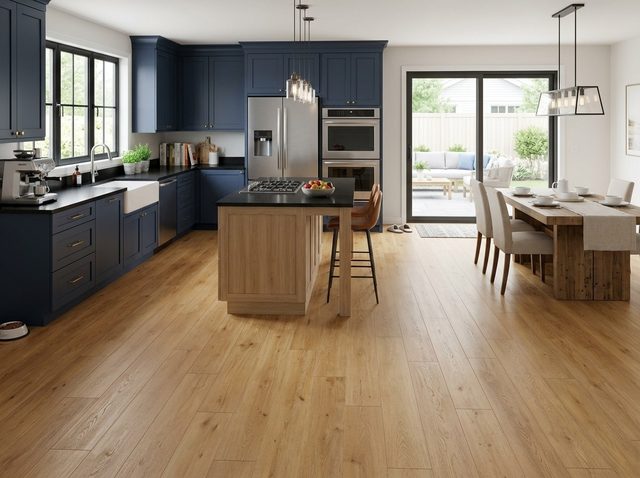
Recent work you can price
Flooring Installation in San Francisco — FAQ
How much does flooring installation cost in San Francisco?
Typical installed ranges: laminate and LVP $4–8 per square foot, engineered hardwood $8–14, solid hardwood $12–18. San Francisco jobs tend toward the upper ends because of building access, parking logistics, and the subfloor leveling older homes need. Refinishing existing hardwood is usually cheaper than replacement. A free in-home measure gets you an exact line-item quote.
My floors slope — can you level them before installing?
Yes, and in San Francisco we usually must. Post-and-pier Victorians settle unevenly, so we map the floor with a level, then correct with sistered joists, sleepers, or self-leveling compound depending on structure and height constraints. Leveling is quoted as its own line so you see the real cost. Installing over a wavy subfloor voids most manufacturer warranties, so we don't do it.
Is it worth refinishing original Victorian floors?
Often, yes. Old-growth fir and quarter-sawn oak have grain quality new material can't match, and refinishing typically costs less than replacement. The limits are wear-layer thickness — floors sanded many times before may not take another pass — and softness, since fir dents under active households. We assess board thickness and past repairs on site and give you both paths priced.
What do HOAs require for flooring in SF condos?
Most associations set a minimum impact-sound insulation rating for hard flooring above occupied units and require approval of the full assembly before installation. Some restrict hard surfaces in bedrooms. We read your CC&Rs, specify an underlayment that meets the stated rating, submit the paperwork, and schedule inside HOA work hours. Getting approval first avoids the worst outcome: removing a brand-new floor.
Which flooring handles the fog belt best?
For the Sunset and Richmond we lean toward engineered hardwood or quality LVP, especially at ground level. Engineered boards have a plywood core that stays stable through the moisture swings that make solid wood cup, and LVP is indifferent to damp entries and sandy shoes. If your heart is set on solid hardwood, we check crawl-space conditions and vapor barriers first and tell you honestly whether it's wise.
How long does a whole-home flooring installation take?
For a typical San Francisco flat or house, plan on materials acclimating in the home for several days first, then roughly one to two weeks of installation depending on square footage, leveling scope, and whether we're refinishing or laying new. Occupied homes are done in phases so you keep usable rooms. Site-finished hardwood adds sanding and curing days; prefinished and LVP are walkable immediately.
Do you handle flooring for rental units and multi-unit buildings?
Yes. We re-floor rentals and garden units between tenants — usually LVP for durability and turnaround speed — and take on volume installation for general contractors and small developers across multiple units. Owners get the same crew and standards as our custom work, with scheduling built around vacancy windows. Weekly photo updates keep off-site owners current without a site visit.