Cabinet refacing vs replacement is the decision that sets the budget for most Bay Area kitchen projects, because cabinetry typically eats 30 to 40 percent of the total spend. Reface when the bones are good and you can turn a dated kitchen around for a fraction of a full remodel. Replace when the boxes are failing or the layout is fighting you every day, because refacing then only buys you a prettier version of the same problem. After 18 years and more than 140 projects across the Bay Area and Greater Sacramento, we have done plenty of both — and we have talked plenty of homeowners out of the more expensive option. Here is how we actually decide.
What Cabinet Refacing Actually Is
Refacing keeps the existing cabinet boxes fastened to your walls and replaces everything you see and touch: new doors and drawer fronts, new hinges and drawer slides, and a matching veneer or laminate skin over the exposed face frames, end panels and toe kicks. Done properly, the result is hard to tell from new cabinetry, and it can carry any door style you like — shaker, slab, beaded inset look, painted or stained.
What refacing is not: it is not a paint job. Repainting existing doors in place is refinishing — cheaper, faster, and much shorter-lived, because you are recoating substrate that has already absorbed twenty years of cooking grease. And refacing is not a layout change. Every cabinet stays exactly where it is, at the same height, the same width, with the same interior. If what you dislike is where your cabinets are, refacing cannot fix it.
When Cabinet Refacing Wins
The boxes are genuinely solid
This is the first thing we check on a site visit, and you can check it yourself in five minutes. Open a door and tug the box gently side to side — a sound cabinet barely moves. Look at the exposed edge of a shelf: solid plywood shows thin laminated layers, particleboard shows compressed chips. Press on the floor of the sink base and look for softness or dark staining. Pull a drawer all the way out and see whether the screws still bite.
A lot of Bay Area housing stock works in your favor here. Homes built from the 1950s through the 1980s, and custom mid-century built-ins in particular, often have three-quarter-inch plywood boxes with real face frames that are squarer and stiffer than a fair amount of what is sold flat-packed today. Throwing those away to install thinner boxes is a downgrade you pay for twice.
The layout already works
If you are not annoyed by where the sink, range and refrigerator sit, if two people can work without colliding, and if you have a usable run of counter beside the cooktop, the layout is doing its job. Refacing is then a pure finish upgrade, and finish upgrades are exactly where refacing gives you the best return.
Budget and downtime matter more than perfection
A reface on a typical kitchen is one to two weeks on site, not two to three months. Your countertops stay, your plumbing stays, your kitchen stays usable for most of the job. Because nothing structural, electrical or plumbing changes, a like-for-like reface usually does not require a permit — though requirements do vary by jurisdiction, so we confirm with the city before we start rather than assuming. And keeping sound boxes out of the landfill is a real, if unglamorous, benefit.
Refacing is a finish decision. Replacement is a layout decision. If your complaint is how the kitchen looks, reface it. If your complaint is how the kitchen works, replace it — new doors will not make a bad plan good.
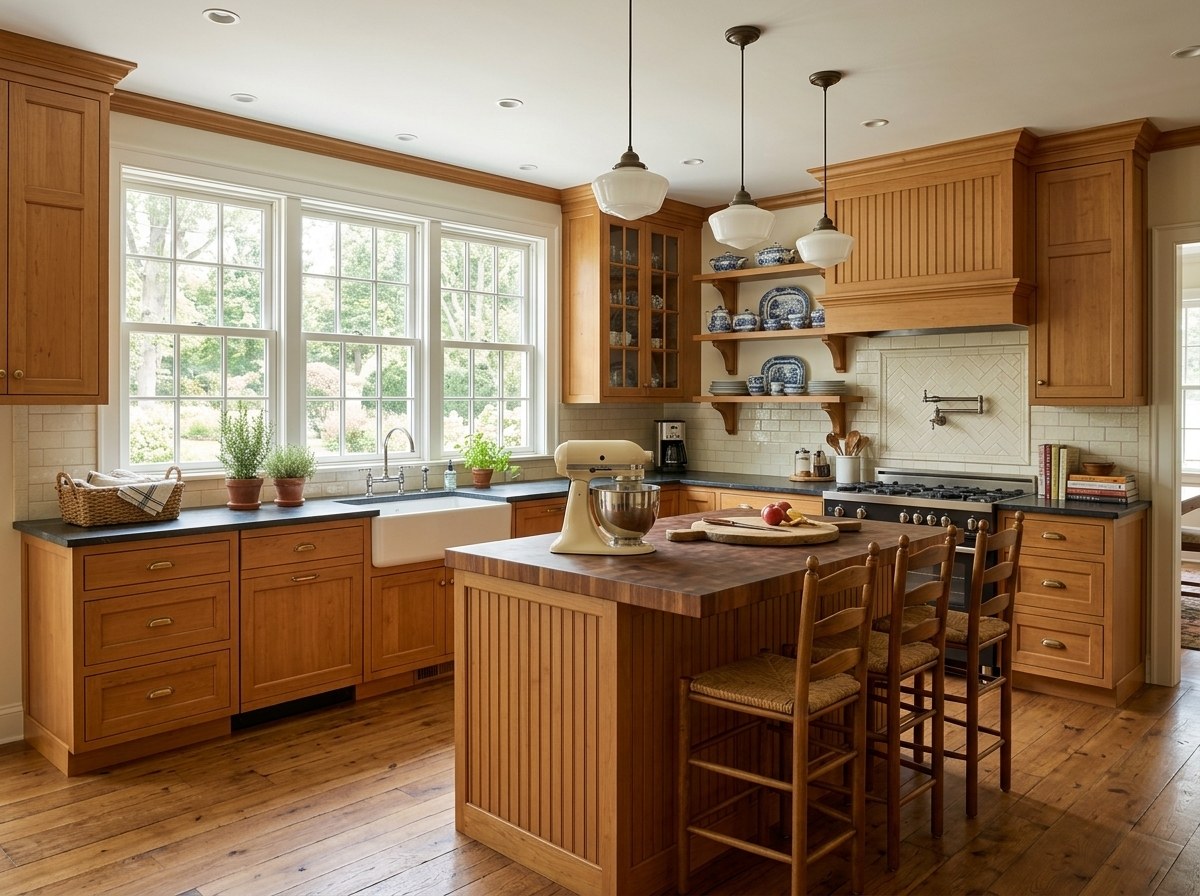
When Cabinet Replacement Wins
You want to move something
Any change to a cabinet's footprint means a new cabinet. Taking uppers to the ceiling instead of stopping at a dusty soffit, relocating the sink, adding an island, widening a base to take a 36-inch range, going deeper for a panel-ready refrigerator, opening a wall between kitchen and dining room — none of that is available through refacing. Homeowners sometimes try to compromise here and reface around a layout they already resent. That money is gone, and the resentment stays.
The boxes are builder-grade particleboard
Much of what went into tract construction and rental-grade remodels from the late 1980s onward is particleboard or thin MDF with a printed foil skin. The tells are shelves that sag in the middle, hinge screws that spin without catching, swollen edges near the dishwasher, and foil peeling at the corners above the range. Hanging two thousand dollars of solid doors on boxes like that is the single most common way people waste money on cabinets. Refacing does not add strength; it adds weight.
Water damage, rot or pests
A slow supply-line drip or a dishwasher that leaked for a season destroys the sink base from underneath, and the damage is almost always worse than what shows. Once the deck is soft, replacement is not really optional — and the substrate underneath needs opening up, drying and repair before anything new goes in. Older Bay Area homes with crawl spaces occasionally add pest damage to the picture. In these cases we replace and fix the cause, because a reface just hides it for a year.
You want drawer-based storage
The biggest day-to-day upgrade in a modern kitchen is not the door style, it is deep drawer banks replacing base cabinets with one shelf and a door. Some roll-out trays can be retrofitted into existing boxes, and we do that where it makes sense, but a true drawer base — full-extension, soft-close, sized for pots — needs a new box. If your list starts with "I want drawers everywhere," you are describing replacement.
What Each Option Costs in the Bay Area
These are the ranges we quote on a typical 10-by-12 kitchen with roughly 25 to 35 doors and drawer fronts, installed, in our experience across San Jose, the Peninsula, the East Bay and Sacramento. Your kitchen will land somewhere inside them, not on a single number — treat this as calibration, not a quote.
- Refinishing existing doors in place (paint or spray): $3,000–$6,000. Cheapest, and the shortest-lived.
- Laminate or rigid thermofoil refacing: $8,000–$14,000. Durable, limited in door profiles.
- Wood veneer refacing with solid-wood doors and new hardware: $12,000–$22,000. This is the version that genuinely reads as a new kitchen.
- New stock or semi-custom cabinets, installed: $18,000–$35,000, plus demolition and any wall or plumbing work.
- Custom cabinets built for your kitchen: $30,000–$60,000 and up, depending on species, finish and hardware.
Two cost mechanics matter more than the headline numbers. First, in the Bay Area the premium is labor, not material — which is why refacing, with far fewer trade hours, saves proportionally more here than it would elsewhere. Second, if the boxes change, the countertops almost always come off, and stone rarely survives the trip. Refacing keeps your counters, which quietly saves another $4,000 to $9,000 you never see on the cabinet line. For how these numbers fit into a whole project — roughly $15,000 for a cosmetic refresh, $25,000–$45,000 mid-range, $50,000–$95,000 upscale — see our Bay Area kitchen remodel cost guide.
The Middle Path: Custom Cabinets Where They Count
The refacing-versus-replacement framing assumes one answer for the whole kitchen, and often that is wrong. We build custom cabinets ourselves, which lets us do the hybrid: reface the perimeter runs that are structurally fine, and build new custom boxes only for the wall you actually want to change — a full-height pantry, an island, a reworked appliance wall, a coffee station where a useless corner used to be.
One honest caveat. Matching a factory finish on a refaced run to a new custom run beside it is genuinely difficult, especially with stained wood, where grain and tone shift. We handle it by drawing the boundary at a natural break — a corner, a doorway, a change in ceiling height — and by matching within a single door profile rather than trying to blend two finishes on the same wall. Painted finishes are far more forgiving than stains. You can see how these hybrids come out in our project portfolio.
A Decision Checklist
Walk your kitchen with this list. Answer honestly — the checklist is more reliable than a showroom conversation.
- Are the boxes plywood, square and solid when you tug them?
- Would you keep this exact layout even if the budget doubled?
- Are your countertops in good condition and worth saving?
- Are the appliances staying the same sizes?
- Has water ever gotten under the sink base or behind the dishwasher?
- Do you need deep drawers, roll-outs and full-height storage throughout?
- How many weeks can your household realistically live without a kitchen?
Mostly yes to the first four and no to items five and six? Reface, spend the savings on countertops, lighting and a better range, and be finished in two weeks. Yes to five or six, or no to items one and two? Replace — the cheaper route will cost you more within five years. Split down the middle? That is exactly the hybrid case, and it is worth a real site visit rather than a phone estimate.
See It Before You Spend a Dollar
The hardest part of this decision is that you are comparing two things you cannot see yet. So start by looking at them: upload a photo of your kitchen to our free AI design preview and get a redesign render in seconds — door styles, finishes and full-height cabinetry on your own walls, at no cost and with no salesperson attached. When you want real numbers, book a free in-home measure and we will open a door, press on the sink base and tell you straight which side of this decision your kitchen is on. We work throughout the Bay Area, including kitchen remodeling in San Jose, the Peninsula, the East Bay and Greater Sacramento.
Zen Construction is a licensed California general contractor, CSLB #1041370 — verify us any time at cslb.ca.gov. Financing is available on both refacing and full replacement projects.